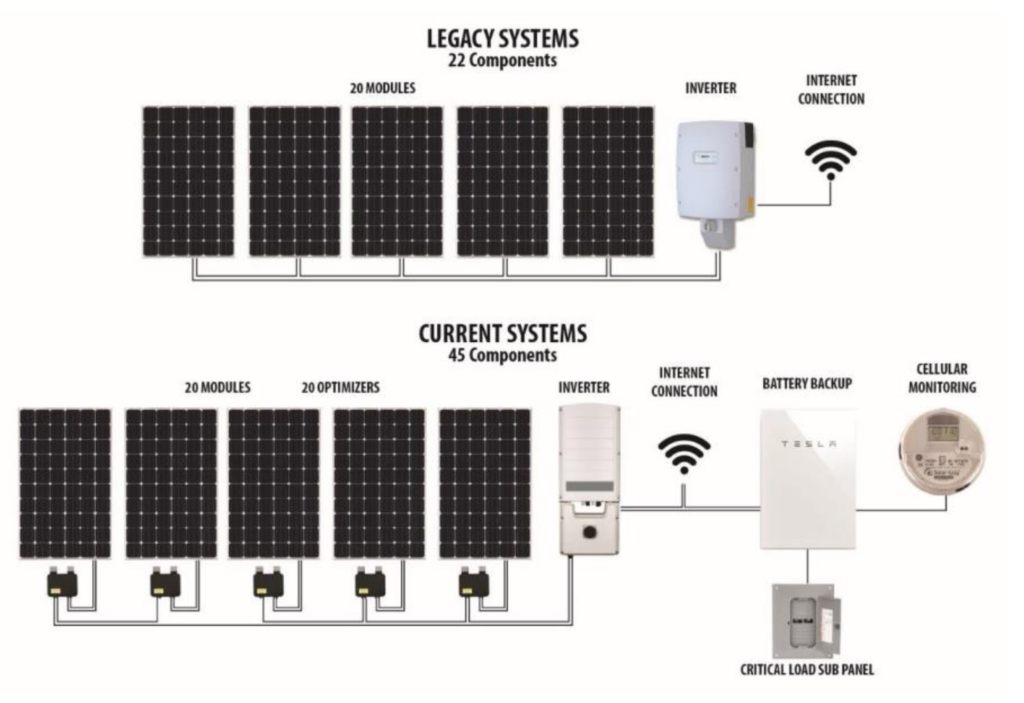
As technology has evolved and electrical codes have changed, the number of components in average rooftop solar systems has more than doubled, leading to increased system complexity and cost of maintenance. Where a typical residential system used to simply consist of panels and an inverter, newer systems can include panels, module level electronics(MLE’s), an inverter, battery storage, system controller(s), additional processors within the MLE’s and/or a cellular-enabled meter, etc. ad nauseam. Many of these new devices are “smart” devices that need to be networked to each other and to the outside world. Each additional device, bell or whistle increases the potential for failure and total cost to maintain.1
There’s been a lot of questions and a lot of demand for Solar-ray to be doing what all of the other solar contractors were doing – selling lots of complicated equipment with the sales pitch being that this leads to increased production of electricity.
However, because of our experience and our knowledge of the industry, we recognized that there were going to be inherent problems in adding unnecessary equipment to the solar systems.
The industry is now seeing an increased amount of technical failures and there is no one to service such issues due to the fact that the companies that sold the system are no longer in business.
Solar Ray has been receiving multiple phone calls, on a weekly basis, asking for servicing with the referenced architecture and due to the inherent problem that service personnel are no longer available from the companies that they originally purchased solar panels from.
As surviving companies age, they have realized that systems with additional, complex components in their architecture have become prone to increased service costs. In fact, this is probably the main cause for the high rate of failure in start-up solar companies.
In regards to storage and battery, we see the same recurring issue. If there is a specific need that a customer would require a battery system, Solar Ray will accommodate such systems. However, adding a battery does increase the servicing during the life of the solar system and increase the fragility of it as well.
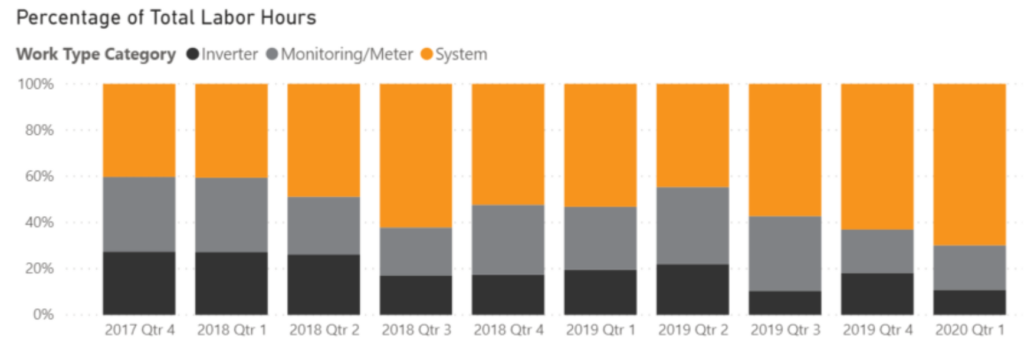
According to KWh analytics analysis of 110,000 work orders, at its most basic level, it is unsurprising that adding components and complexity to a system will lead to increased initial cost and maintenance expenses since every new device brings an increased risk of failure, and each “smart” device adds a microprocessor and communications equipment into the system architecture. This means that not only do you have more potential points of electrical failure, you also have a chance of processor failure or communications outage.1
“When designing new systems, it is important to weigh the advantages of these new components against the tradeoff of not just additional upfront costs in equipment, installation, and commissioning, but also increased maintenance costs over the life of the system.”
Misleading information about increased performance which has also been found to be untrue.
The equipment that Solar-ray has historically been using specifically for the reason of increased performance and also durability. Solar-rays’ commitment to reliable and durable equipment and installation practices to ensure the lowest cost of ownership to the customer over time.
With the least amount of worry, the least amount of service and the least amount of long-term care.
Details of the studies referenced can be found here – https://www.kwhanalytics.com/
References:
Matsui, Sarah. “Solar Risk Assessment 2020: Quantitative Insights from the Industry Experts.” KWh Analytics, KWh Analytics, 17 June 2020.